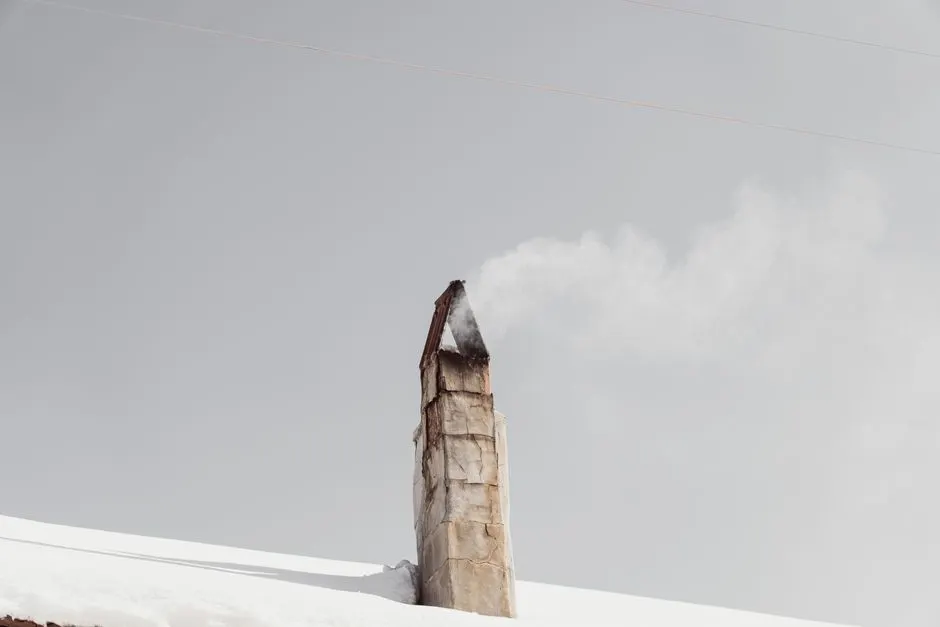
A chimney that smokes heavily is almost always a draft problem, not a fire problem. The fire is burning; the smoke just has nowhere to go but back into your room. That single fact explains about 90 percent of the calls we take in Independence, Ohio between October and March.
Below we walk through the six causes we actually find on service calls, how to tell which one you have, and what it costs to fix each one in 2026. If you want the short version: cold flues, blockages, and creosote account for most of it, and all three are fixable.
The short answer: your chimney has lost its draft
Draft is the upward pull of air through the flue. Hot smoke is lighter than cold outside air, so it rises - but only if the flue is warm, open, and the right size for the fire below it. Break any one of those three and smoke stalls, cools, and spills into the room.
Why is my chimney smoking so much Independence OH is really a question about which of those three conditions failed. A flue that worked fine last January can fail this October because the masonry is 20 degrees colder, the cap is clogged with leaves, or a new high-efficiency furnace is now competing for the same household air.
Here is the definitional version: chimney smoking problems in Independence are draft failures - the flue cannot move combustion gases up and out fast enough, so they back up into the living space.
Why is my chimney smoking so much in Independence OH?
Independence sits in the Cuyahoga Valley, and that geography matters more than most homeowners realize. Cold air settles in the valley overnight, and our chimneys face a bigger temperature gap between a 70-degree living room and a 25-degree exterior than a chimney in a flatter, warmer region does. That gap is what drives draft - and what kills it when the flue is cold.
Add the housing stock. A large share of homes around Chimney Sweep in Downtown Independence and the older streets off Brecksville Road were built between 1940 and 1975, with original masonry flues sized for wood or coal. When those same flues get connected to a modern gas furnace or a newer wood stove, the sizing is wrong from day one.
We also see a specific pattern in the Truman Historic District Chimney Sweep homes: tall, narrow exterior chimneys with no interior chase. They run cold, they run slow, and they smoke on the first fire of the season almost every year.
The six causes we find most often
1. A cold flue on the first fire of the season
Cold air is heavy. It sits in the flue like a plug, and the first match you light has to push that plug out before smoke can rise. If the flue is 40 degrees and the house is 70, that plug can take 10 to 15 minutes to clear - and during those minutes, smoke comes into the room.
The fix is simple: preheat the flue with a rolled newspaper torch held near the damper for 60 to 90 seconds before you lay the fire. If the smoking stops after the flue warms, you had a cold-flue problem, not a structural one.
2. A blocked or partially blocked flue
Leaves, bird nests, and fallen mortar crowns are the three most common blockages we pull out of Independence chimneys. A flue that is 70 percent blocked can still pass some smoke - which is why homeowners describe it as "smoking so much" rather than "not working at all."
If smoke pours out the moment you open the firebox door, and the chimney has not been swept in two or more years, assume a blockage until proven otherwise.
3. Creosote buildup narrowing the flue
Creosote is the tar-like residue that condenses on flue walls when wood burns cool or wet. A quarter-inch of glaze can cut usable flue area by 20 to 30 percent. At half an inch, you are looking at a real draft restriction and a serious fire risk.
This is the cause behind most excessive chimney smoke causes Independence Ohio calls in homes that burn wood four or more nights a week. The flue is not blocked - it is just too narrow now to move the volume of smoke the fire is producing.
4. Negative pressure inside the house
Your chimney competes with every exhaust fan in the house. A kitchen hood moves 200 to 600 CFM. A bathroom fan moves 50 to 110. A high-efficiency furnace and a dryer can pull another 200 to 400 combined. If your home is tight - new windows, spray foam, weatherstripping - that air has to come from somewhere, and the easiest source is down your chimney.
Test it: crack a window two inches on the side of the house the wind hits, then light the fire. If the smoking stops, you have a pressure problem, not a chimney problem.
5. The chimney is too short or too small for the firebox
The rule of thumb is a 3:1 ratio - the flue's cross-sectional area should be roughly one-twelfth the area of the fireplace opening. A wide, open hearth under a 8x8 clay tile flue will smoke every time, no matter how clean it is.
This is the cause we cannot fix with a sweep. It needs a flue liner sized correctly, or a smoke guard across the top of the opening.
6. A damper that is closed, stuck, or missing
We find a closed damper on roughly one in eight smoking-chimney calls. It happens after a summer of not using the fireplace, or after a chimney cap install where the damper got bumped. Check it before you call anyone.
How to fix a smoking chimney in Independence Ohio
Work through these in order. Most homeowners find the answer in the first three steps.
- Open the damper fully and confirm it with a flashlight. Look straight up the flue from the firebox.
- Preheat the flue for 90 seconds with a newspaper torch before lighting the fire.
- Crack a nearby window two inches. If smoke stops, you have a pressure issue.
- Check the chimney cap and crown from the ground with binoculars. Look for leaves, nests, or a collapsed crown.
- Book a sweep if it has been 12 months or more since the last cleaning.
If none of that works, the flue is likely undersized or the liner is damaged. That is a job for a camera inspection, not a homeowner with a brush. Our team handles chimney cleaning Independence OH with a full flue camera scan on every visit, so we can tell you exactly what is narrowing the flue before we quote anything.
Typical 2026 pricing in this area runs $185 to $295 for a standard sweep and inspection, $450 to $900 for a smoke-guard or top-sealing damper install, and $2,400 to $5,800 for a full stainless liner replacement on a two-story chimney. Those are real ranges - we quote the exact number after we see the flue.
Common mistakes that make chimney smoke worse
We see the same five mistakes over and over on Independence service calls, and every one of them makes a small draft problem into a big one.
- Burning unseasoned wood. Green wood spends its first energy boiling water, not making heat. That cool, wet smoke condenses as creosote and slows the draft. Season your wood 12 months minimum.
- Running the furnace and the fireplace at the same time. The furnace flue and the fireplace flue compete for the same air. On tight homes, the furnace usually wins.
- Using a fireplace insert without a properly sized liner. An insert dumping into an oversized original flue is a classic smoke-back setup.
- Ignoring a cracked crown or missing cap. Water gets in, freezes, spalls the flue tile, and the flue narrows a little more every winter.
- Sweeping the flue but never inspecting it. A clean flue can still be cracked, offset, or undersized. Cleaning and inspection are two different jobs.
If you have not had a proper look at the flue in a few seasons, a chimney inspection Independence OH with a camera is the fastest way to rule out the expensive causes before you spend money on the cheap ones.
When to call a professional
Call us when the smoke does not stop after you have opened the damper, preheated the flue, and cracked a window. That combination rules out the three easy fixes and points to a blockage, a creosote restriction, or a sizing problem - all of which need tools and a camera.
Call immediately if you smell a sharp, acrid odor that is not wood smoke, if you see glaze flaking off the flue walls, or if smoke is coming through the mortar joints on the exterior of the chimney. Those are signs of a chimney fire or structural damage, and they do not get better on their own.
FlueSafe Masonry serves Independence and the surrounding Cuyahoga Valley communities. We sweep, inspect, and repair - and we tell you plainly whether the fix is a $200 cleaning or a liner replacement. No upsell, no scare tactics.
Frequently Asked Questions
Why is my chimney smoking so much in Independence OH?
Cold valley air, undersized flues in older homes, and creosote buildup are the three leading causes here. Start by preheating the flue and cracking a window. If smoke still spills after 15 minutes, the flue is blocked or restricted and needs a sweep and camera inspection.
How do I stop my chimney from smoking in Independence Ohio?
Open the damper fully, preheat the flue for 90 seconds, and crack a window two inches before lighting. If that fails, book a sweep - a flue that has not been cleaned in 12 months is the most common single cause of smoke backup we find.
What causes chimney smoke backup in Independence?
Negative household pressure, a cold exterior flue, and partial blockages from leaves or nests. Homes built before 1975 with original clay tile flues are the most common offenders, especially in the older neighborhoods near Downtown Independence and the Truman Historic District.
Should I call a chimney sweep for smoking chimney in Independence OH?
Yes, if the smoke continues after you have opened the damper, preheated the flue, and cracked a window. A sweep with a camera can identify creosote, blockages, and cracked tiles in a single visit, usually within 60 to 90 minutes.
How often should a chimney be cleaned in Ohio?
Once a year if you burn wood regularly, and every 18 to 24 months for occasional use. Ohio's humid summers and freeze-thaw winters accelerate creosote glaze and masonry spalling, so annual inspections matter more here than in drier climates.
Get help with Chimney Sweep in Independence
If your fireplace is still smoking after the basics, we can be out to look at it - usually the same week, often the same day. We serve Independence, Seven Hills, Brooklyn Heights, and the rest of the Cuyahoga Valley.
Call FlueSafe Masonry at (855) 961-0129 and tell us what you are seeing. We will tell you what it likely is before we ever roll a truck.